
A GOOD DOG TRAINER CAN TRAIN A DOG. A GREAT DOG TRAINER CAN TEACH THE HUMAN.
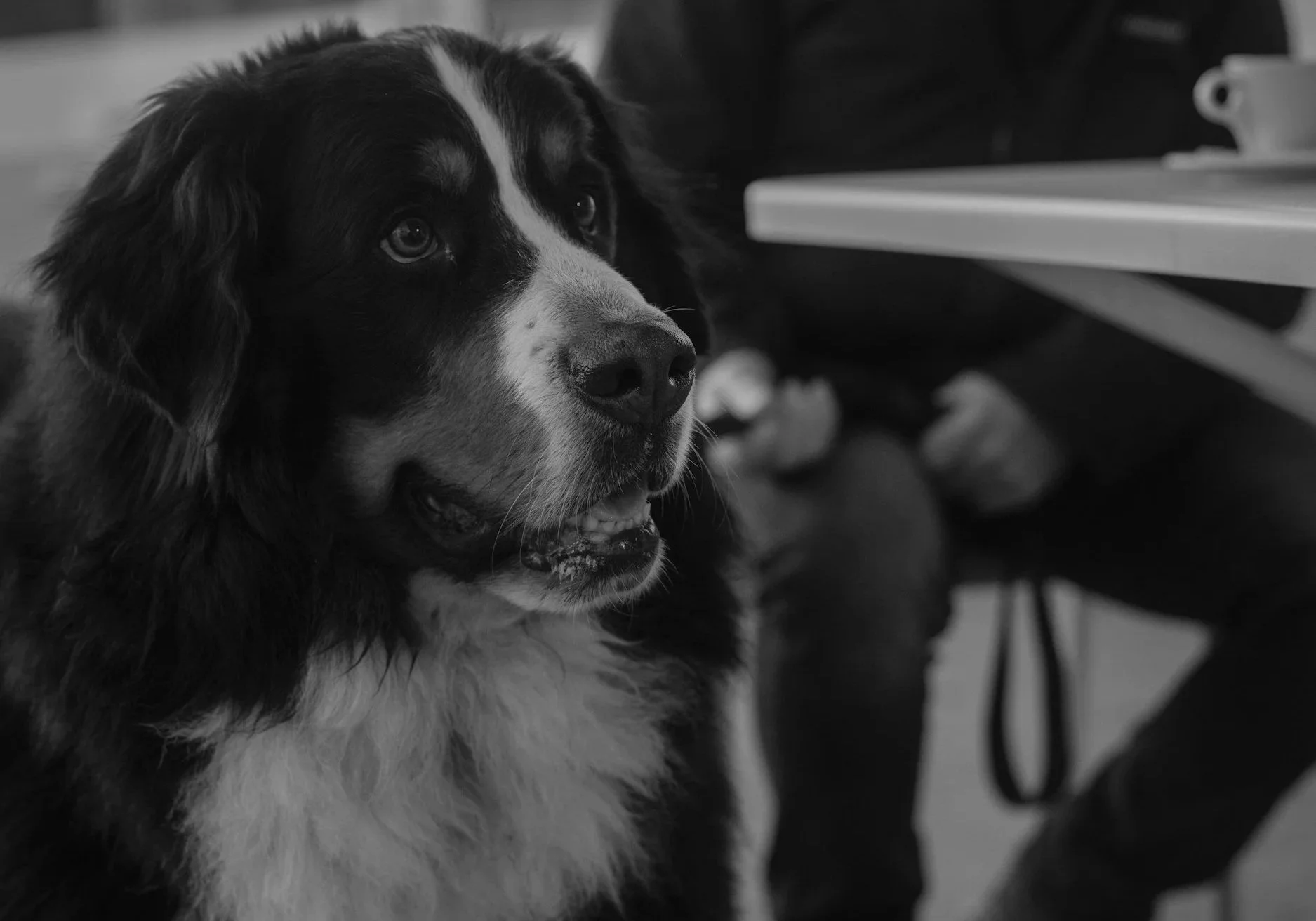
A GOOD DOG TRAINER CAN TRAIN A DOG. A GREAT DOG TRAINER CAN TEACH THE HUMAN.
Because the dog is only half of the equation.
Let's talk about something that doesn't get nearly enough attention in the dog training industry.
There is a difference between being good at training dogs and being good at teaching people how to train their dogs.
And before anyone gets their feathers ruffled, hear me out.
There are some incredibly talented dog trainers out there. Trainers who can read body language beautifully, understand pressure and release, build engagement, troubleshoot behavioral problems, and take a dog that seems completely unmanageable and turn them into something pretty spectacular.
But here's my question.
Can you teach the owner to do the same thing?
Because that's where things get interesting.
THE DOG ISN'T THE ONLY STUDENT.
When someone sends their dog to a Board & Train, they're trusting you to do more than teach a handful of commands.
Sure, you can teach that dog a beautiful heel. You can build a rock-solid place command. You can get that dog recalling around distractions, holding duration, and responding to the smallest changes in your body language.
But what happens when that dog goes home?
What happens when the owner doesn't have your timing?
What happens when they don't recognize the subtle shift in body language that tells you their dog is about to make a decision?
What happens when they don't understand WHY you applied pressure, WHY you released it, or WHY you chose to reinforce one behavior over another?
The dog might understand the assignment, but does the owner?
Because if the answer is no, we have some more work to do.
TRAINING DOGS AND TEACHING PEOPLE ARE TWO DIFFERENT SKILL SETS.
Being a good dog trainer requires patience, timing, consistency, adaptability, and an understanding of canine behavior.
Being a good educator requires all of that, PLUS the ability to communicate those concepts to someone who may have absolutely no experience with any of it.
And that is an entirely different ballgame.
You can tell an owner to correct their dog for breaking place.
Or you can teach them what breaking place looks like BEFORE it happens, how to recognize the dog's decision-making process, when to intervene, how to follow through, and when to reward the dog for making the right choice.
You can tell someone to stop letting their dog pull on the leash.
Or you can explain leash pressure, spatial awareness, body positioning, reinforcement history, and how their own movement influences the dog's behavior.
One approach gives instructions. The other builds understanding.
And understanding is what creates consistency.
YOUR DOG LISTENING TO ME ISN'T THE FLEX YOU THINK IT IS.
I say this as someone who genuinely LOVES the process of training dogs.
I love watching things click. I love taking a dog that struggles with impulse control and teaching them how to think through situations. I love the relationship that develops when communication starts making sense.
But here's the thing.
My ability to handle your dog doesn't automatically translate into your ability to handle your dog.
And quite frankly, it shouldn't be the end goal.
I don't want a client leaving a lesson thinking, "Wow, my dog listens so well to her."
I want them leaving thinking, "Holy crap, I actually understand how to get that behavior myself."
Those are two very different outcomes.
A dog that only performs beautifully for the trainer isn't necessarily a finished product.
It's a dog that has learned how to work with that trainer.
Now we need to transfer that understanding to the person who actually lives with them.
SOMETIMES THE OWNER NEEDS MORE REPETITIONS THAN THE DOG.
And I mean that with absolutely no disrespect.
Think about it.
As trainers, we spend countless hours watching dogs, learning behavior, practicing timing, and making adjustments.
We're asking an owner to understand concepts that have become second nature to us.
They're going to be awkward.
They're going to be late with their timing.
They're going to accidentally reward something they shouldn't.
They're going to ask the same question three different ways.
And you know what?
That's part of our job.
Sometimes we have to explain something differently. Sometimes we have to physically demonstrate it. Sometimes we have to simplify the exercise, slow everything down, and build the owner's confidence before adding difficulty.
A good educator recognizes when the HUMAN is struggling just as much as they recognize when the dog is.
And instead of getting frustrated, they adjust their teaching.
Sound familiar?
It's almost like the same principles we use when training dogs apply to teaching their people, too.
Funny how that works.
THE REAL TEST IS WHAT HAPPENS WHEN YOU'RE NOT THERE.
This is especially important with Board & Train programs.
Because it's relatively easy to showcase a dog performing beautifully with someone who has spent weeks building a relationship, establishing expectations, and reinforcing behaviors.
But the real test?
It's three weeks after go-home.
It's the owner walking their dog without you standing beside them.
It's the family navigating guests coming through the front door.
It's the owner recognizing their dog becoming overstimulated and knowing how to respond BEFORE everything falls apart.
It's understanding that training isn't just a series of commands. It's a way of communicating throughout everyday life.
And no, that doesn't mean every dog is going to be perfect after training.
Dogs are living, thinking animals. Behavior changes with environments, relationships, reinforcement histories, and consistency.
But an owner who understands the WHY behind the training is far better equipped to work through those changes than someone who was simply handed a list of commands.
SO, WHAT MAKES A GREAT DOG TRAINER?
I don't think it's necessarily the trainer with the flashiest obedience videos.
I don't think it's the trainer who can handle the most difficult dog.
And I certainly don't think it's the trainer who makes every single dog look effortless.
I think some of the best trainers are the ones who can take all of that knowledge and make it digestible for the average pet owner.
The ones who can break down complicated behavioral concepts without making someone feel stupid.
The ones who recognize that different people learn differently, just like different dogs learn differently.
The ones who don't just show you what your dog CAN do, but teach you how to make those behaviors part of your everyday life.
Because your job isn't to make yourself indispensable to the dog.
Your job is to make the owner capable of communicating with their dog without needing you standing there every step of the way.
THE BOTTOM LINE.
You can be an incredibly talented dog trainer and still struggle to educate the human on the other end of the leash.
That doesn't mean you're bad at training dogs.
It means there's another skill worth developing.
And just like we expect our clients to continue learning, growing, and improving, we should be willing to do the same.
At the end of the day, the goal isn't to prove how well I can train your dog.
It's to teach you how to build the same communication, consistency, and relationship that I spent time developing with them.
Because eventually, I go home.
And you and your dog still have a lifetime together.
Train the dog. Educate the human. Build the relationship.
That's the part of dog training that deserves a whole lot more recognition.